By selecting "Accept all", you give us permission to use the following services on our website: Strictly necessary cookies, Brevo, ReCaptcha. You can change the settings at any time (fingerprint icon in the bottom left corner). For further details, please see Individual configuration and our Privacy notice.
The settings you specify here are stored in the "local storage" of your device. The settings will be remembered for the next time you visit our online shop. You can change these settings at any time (fingerprint icon in the bottom left corner).
For more information on cookie lifetime and required essential cookies, please see the Privacy notice.
To send data to Brevo, you need to consent to the transfer of data and storage of third-party cookies by Brevo. This allows us to improve your user experience and to make our website better and more interesting.
To submit forms on this page, you need to consent to the transfer of data and storage of third-party cookies by Google.
With your consent, reCAPTCHA, a Google service to avoid spam messages via contact forms, will be embedded.
This service allows us to provide our customers with a safe way to contact us via online forms. At the same time, the service prevents spam bots from compromising our services.
After you gave your permission, you might be asked to answer a security prompt to send the form.
If you do not consent, unfortunately you cannot use the form. Please contact us in a different way.
Would you like to see these contents? Activate the desired contents for one session only or allow the website to remember these settings. Once you have given your consent, the third-party data can be loaded. For this, third-party cookies might be stored on your device. You can change these settings at any time (fingerprint icon in the bottom left corner). For further details, please see the Privacy notice.
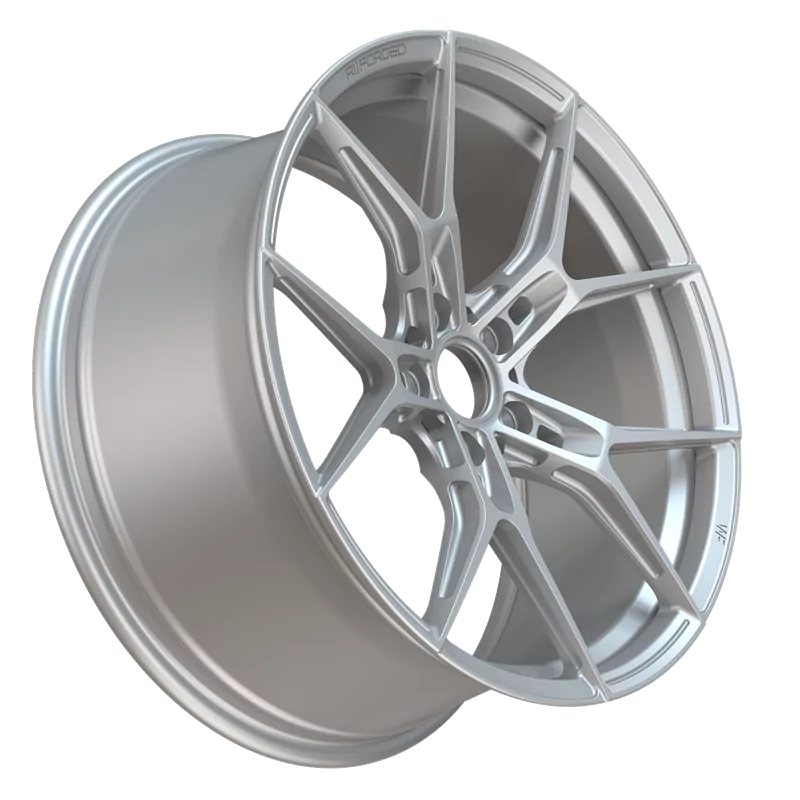
WF Wheels are manufactured using two distinct, advanced production processes, each specifically engineered to meet different requirements in performance, weight optimization, and design.
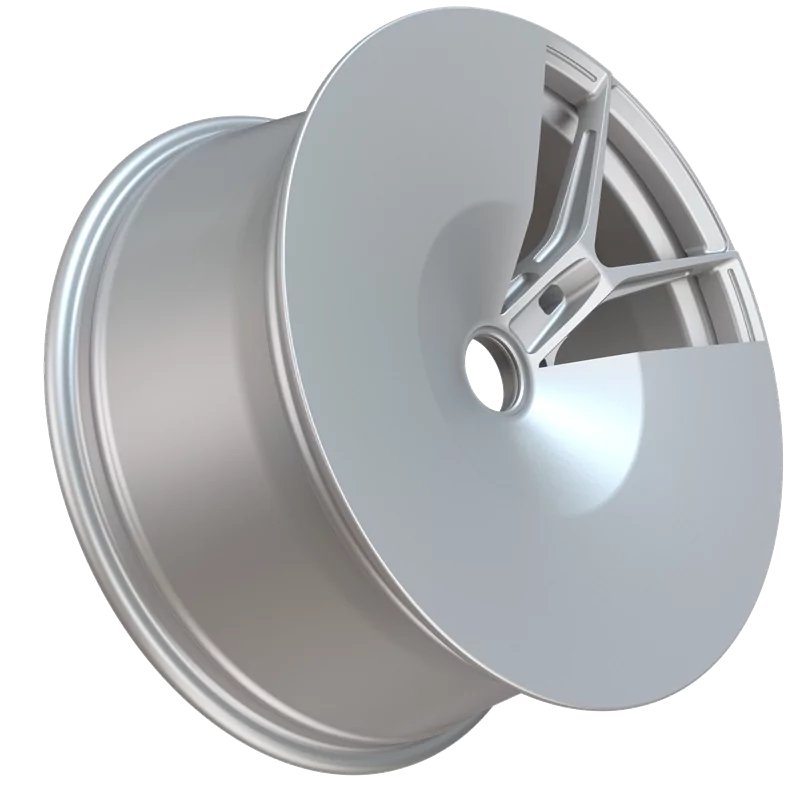
Our Flowforged R technology is based on the proven Japanese flow-forming process and is further enhanced by precision contour machining and targeted weight optimization using multi-axis CNC milling. The initial blank is produced through a specially developed casting process and subsequently strengthened through controlled rolling operations, resulting in significant material densification and increased structural integrity.
In combination with precisely controlled heat treatment and final CNC contour machining, this process achieves a high-quality “forged look,” delivering the visual and technical characteristics of forged wheels at a highly competitive price point. The final hybrid baked coating ensures an exceptionally durable, uniform, and premium surface finish.
Full-forged wheels are manufactured entirely from a high-strength, fully forged T6061-M aluminum billet. This hardened material, widely used in aerospace applications, features an exceptionally high level of material purity and superior mechanical properties. The specialized forging process results in outstanding impact resistance, maximum structural stability, and long-term durability.
The forged billets are fully CNC-machined—partially within our own production facilities in Germany—and subsequently finished with a high-quality powder coating. The result is a wheel of uncompromising precision, exceptional performance, and a distinctive aesthetic that sets new benchmarks in quality and design.
FLOWFORGED R
Step 1
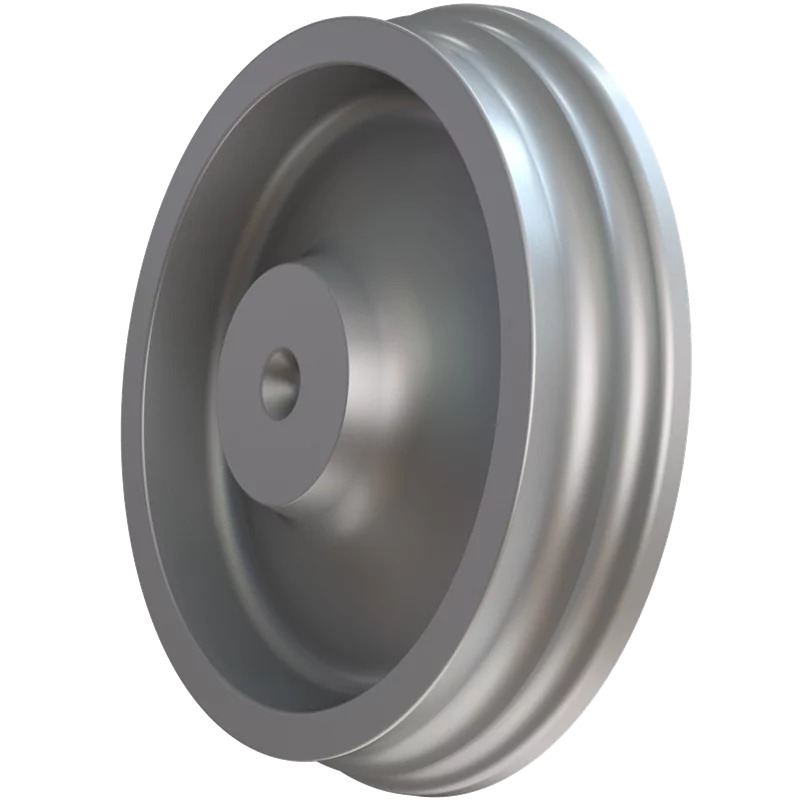
After the production of the flowforged blank, it is placed onto a rolling form and extremely heated using targeted heat.
Step 2
Special hydraulic rollers press the wheel by applying pressure to the rim, while targeted heat is used on the rotating form.
Step 3
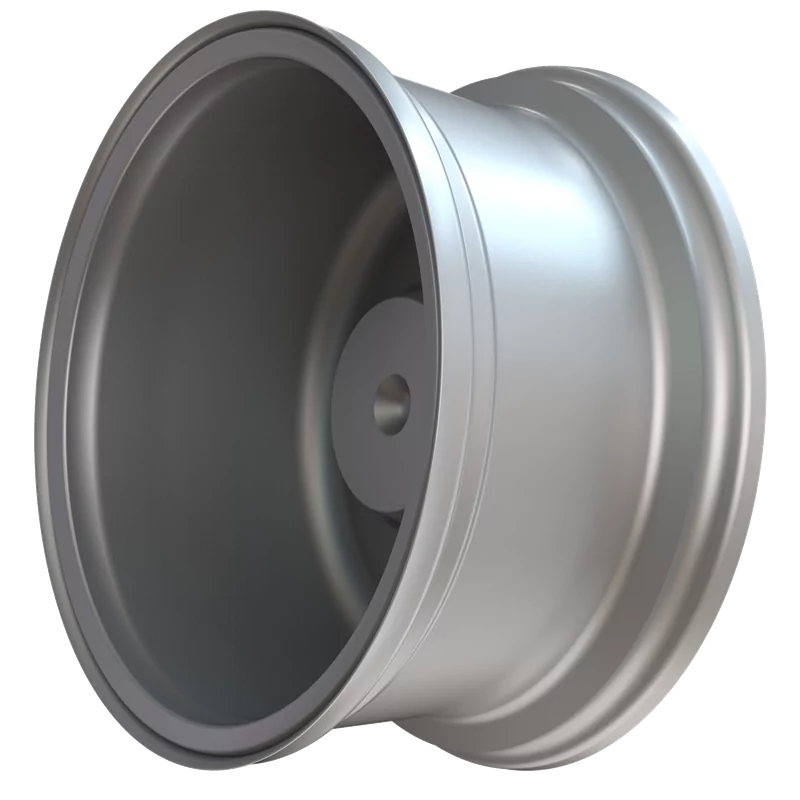
Through precise rotation, the rollers shape the blank into the desired rim width. In the process, the material is extremely strengthened and made durable through compression.
Step 4
Once the high-strength blank is shaped into its final form, the rim is taken to the CNC department for milling and turning.
FULL FORGED
Step 1
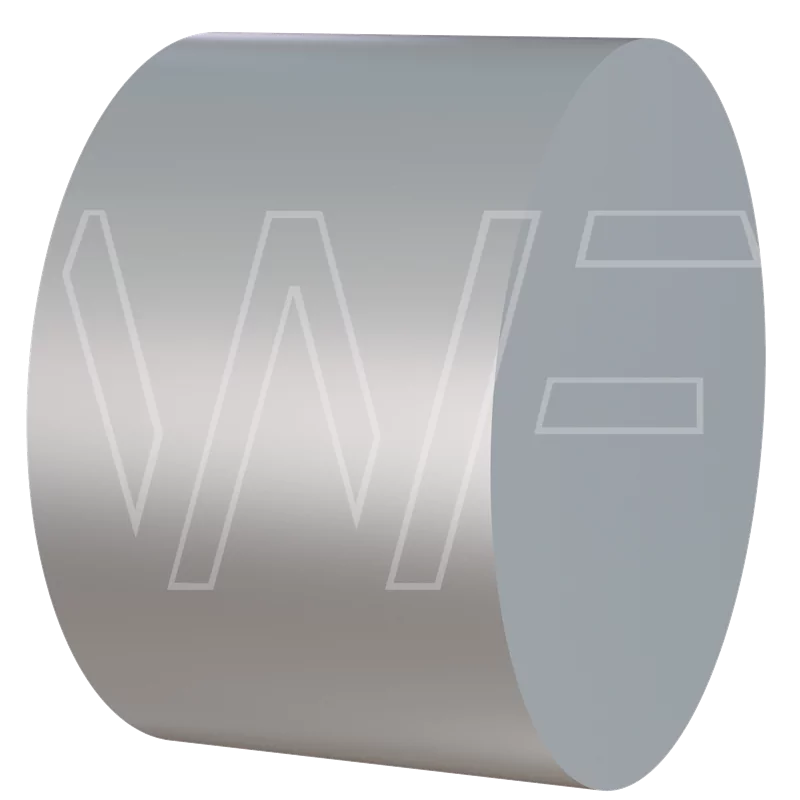
The first step begins with cutting the raw T6061-M material. This material block is made from the same material used in the aerospace industry.
Step 2
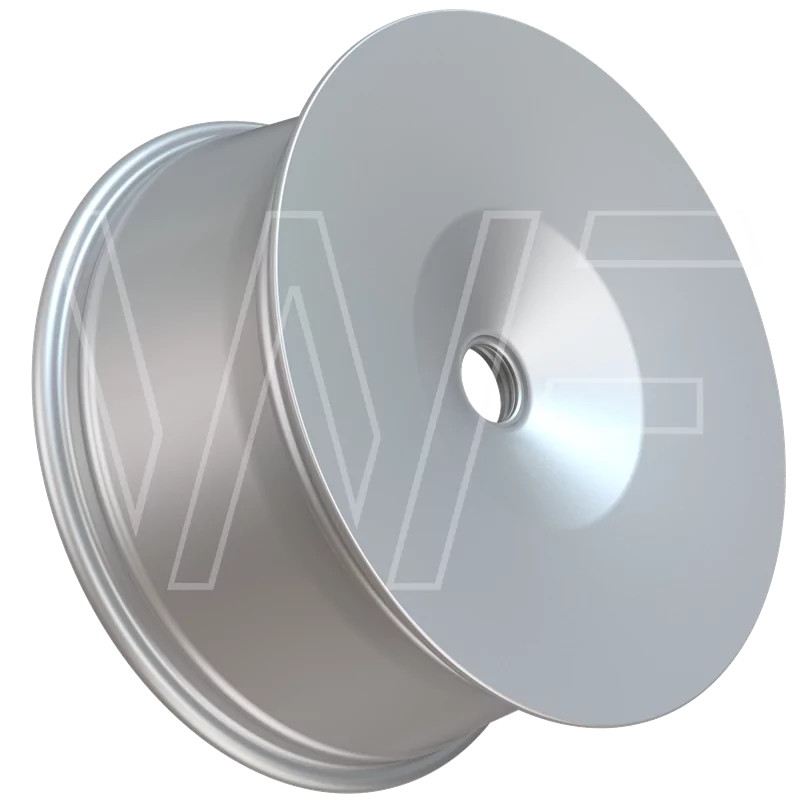
Using compression and heat, the block is pressed and forged into a round shape. This shape serves as the preparation for the flowforming process that we use in our Flowforged R technology.
Step 3
Through precise rotation, the rollers shape the blank into the desired rim width. In this process, the material is significantly strengthened and made durable through compression.
Step 4
The blank is reduced in weight by 30% using the CNC lathe. The back of the rim is defined, and the rim bed is milled. This process shapes the blank. Now it can be finalized with vertical CNC machining.
Step 5
The clamped blank is machined on our ultra-fast 3+2 CNC milling machine, with speeds up to 15,000 RPM, and reaches its final shape within a few hours.
Step 6
After approximately 6 hours, the blank is ready for finishing. The rim is deburred and prepared for painting or powder coating.
Support
We help with all questions
Support
Hello, 👋
We are ready to help you, if we are not here then just leave a message and we will get back to you immediately 🤓.